Sensitivity. Lufubu. Day 235.

I am becoming more of a missionary every day. I find myself brushing little pellets of bat droppings off of plates instead of cleaning them, haggling at the market over the equivalent of 30 American cents, showering out of a bucket.
I keep using the sink that gives me mild electrical shocks because it hasn’t killed or injured me yet. I accepted it without fanfare when I had to cancel class because I was stung on the face and neck by swarming bees. I didn’t even mention it to the community when I was struck by lightning that hit the roof of the house and then arced to my body from the improperly-earthed bathroom piping. “What’s the problem? I didn’t die.”
I am speaking more Bemba now. Actually, I’m also speaking English like it’s Bemba. I can have basic conversations with the kids at the oratory. My students aren’t confused when I talk to them anymore.
People have stopped asking me for money or sweets or for the watch off my wrist as a “remembrance”. They know I’ll just ask them why they don’t give me something for free themselves. It reminds me of a great line I read in Harry Murray’s sociological study of the New York Catholic Worker. Murray was talking about how a lack of meaningful indicators of separation between “Workers” and “guests” fostered a less sensitive, ultimately more personal space of encounter:
One Worker told me of a time when he was arguing with a helper who had a history of mental problems. The helper screamed at him, "You're crazy!" to which the Worker replied "I'm crazy? You're the one who's crazy!" In general, Workers would argue that the way one interacts with a person, and the fact that one is willing to live with that person, is more important than the terms one uses.
When that Worker screamed at the guest and called him crazy, I think it was a transfiguring moment. It shows that the divide between them had been closed. The structures which defined their interaction—“homeless” person and not homeless, social worker and client, aid-giver and aid-receiver—are replaced by something raw, more human. They are no longer locked in a role-play of service. They start to become something more dangerous, more vulnerable.
They start to become friends.
Here’s my favorite part of that Murray piece:
Social workers are distinguished from [clients] by numerous social cues. Social workers have offices, or at least desks. They are better dressed than clients. They have an air of authority. Even an inexperienced outside observer can distinguish the social workers from the clients after a few minutes at a welfare office…
At St. Joseph’s [Catholic Worker] none of this applied… An observer can be at a house for days and still not be absolutely sure who is Worker and who is guest.
Here in Lufubu, it might be a little more obvious who is Salesian and who is student / oratorian / parishioner, but the principle still applies. We might be the wealthiest people in the village—three meals a day, running water (sometimes…), a TV—but we are still in the village. We share the same food (out of the same pot with the same hands), suffer from the same occupational hazards (mosquitos, snakes, scorpions, lightning), do the same work (slashing, digging, scrubbing, cooking), shower out of the same bucket.
Spend enough time in proximity with someone and the gap between you will become smaller. Distinctions will start to disappear. As you come to share in the lives of those you serve, they will start to see themselves reflected in you—and you in them. It allows you to understand them in a way that others do not.
I remarked to my cousin recently that the people I spend time the most with—those I consider my friends—are the same people that most Americans only see in advertisements and fundraising campaigns—impoverished single mothers, hand-to-mouth subsistence farmers, beneficiaries of USAID and UNICEF feeding programs, the “hungry kids in Africa” parents use to guilt-trip children into finishing their food.
What those advertisements miss is not the poverty, the food scarcity, or the need—all of which are surely there. It’s the fact that these people are real, three-dimensional, flesh-and-blood individuals—with real joy, real humor, real hopes, real dreams, real lives. They are not reducible to mouths and stomachs. There’s a lot more to them than their need.
If you spend time with them, become friends, and acclimate yourself to your mutual differences, you find that the drama of their lives is just as complicated, just as interesting, just as valuable, just as real as anyone else’s—and that they don’t go around thinking of themselves as the “poor and helpless Africans” that first-world condescension turns them into.
There’s a great quote from Cardinal Arinze (Archbishop-emeritus of Onitsha, Nigeria) in the John Paul II biography I’ve been reading. He was reacting to the media backlash against the decision to hold the 1993 Africa Synod in Rome, rather than an African country:
“If it had been in an African country,” Arinze said, “the media would have shown the Pope coming down from the plane. And after that they would have shown the woman washing the baby in dirty water in a village, and the children playing in trees, and monkeys in the forest, and some primitive people. They tell us precious little about the Pope’s meeting with intellectuals at the university. They show only things they think are funny and enjoyable for Europeans. We want to be taken seriously. We have much more to share than that.”
A visiting cameraman in Lufubu might just focus on the woman washing the baby in the river, the kids in the oratory climbing the mango tree. They would probably miss the Computer Architecture class where my students are designing circuits with logic gates:
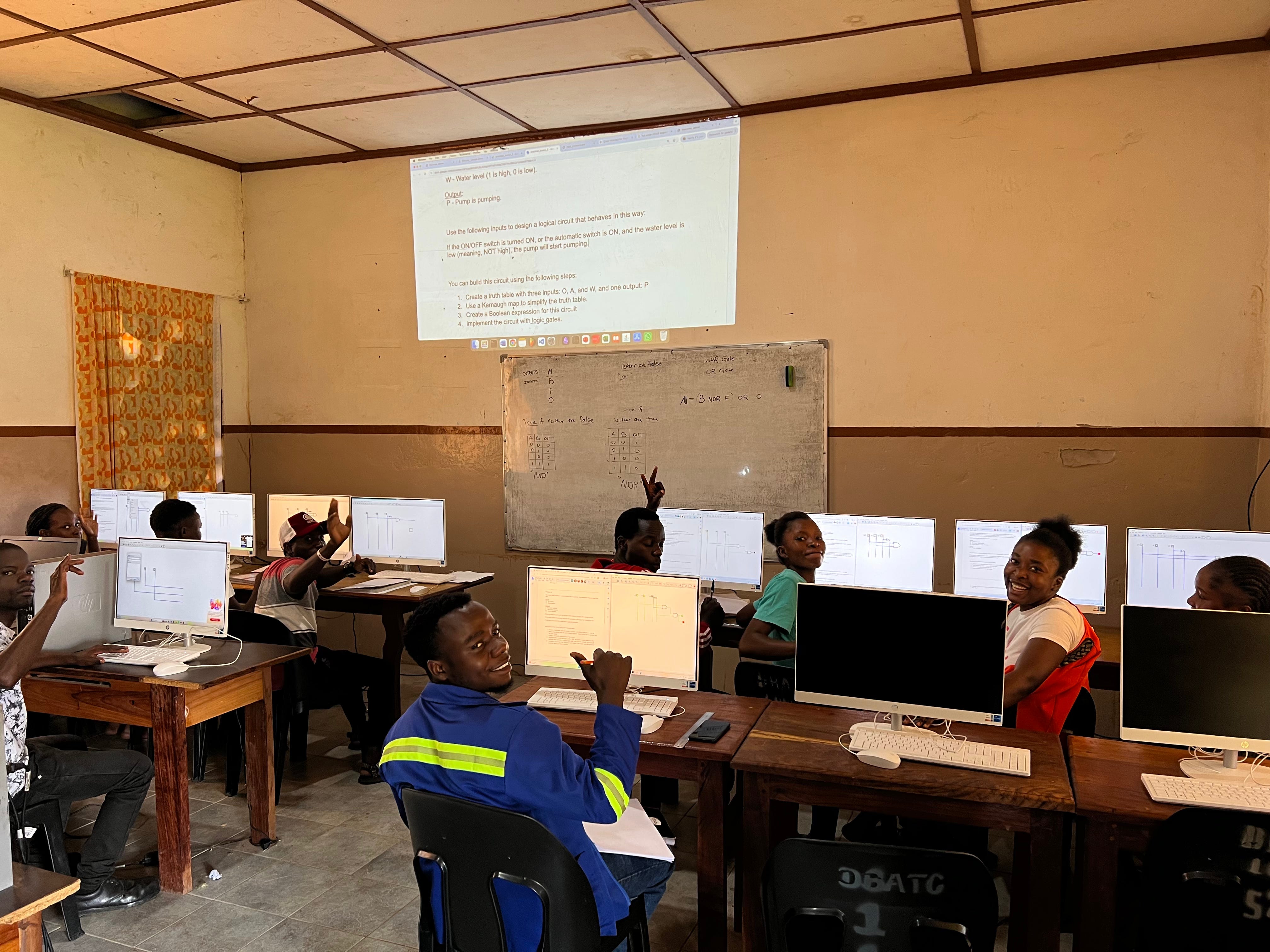
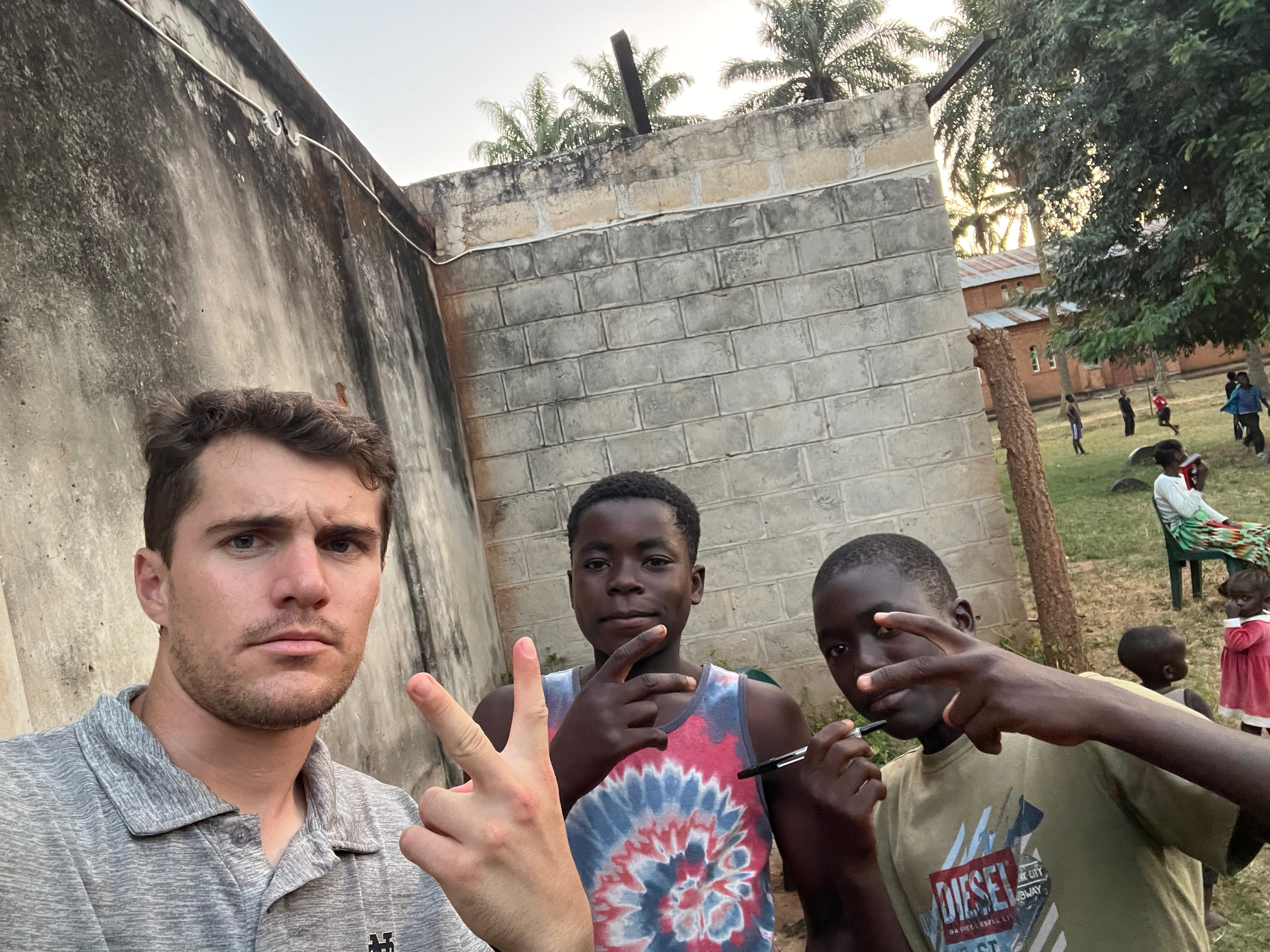
The needy persons here in Lufubu are not characters in an advertisement—these are real children, real young people! Who have the wherewithal, intelligence, and self-awareness to joke about their condition, about the hardships of their lives—and who accept their lot without complaint and without fanfare. One might think that a young person born into impoverished conditions would be bitter, envious, grasping. Instead, you find that, as almost a general rule, young people here are humble in aspect and aspiration, happy with what they have, only seeking the basics of a livable life to be happy. The dream of a young person in Lufubu is to find enough success to build a small house, grow enough food, have the resources to marry and have children, and have enough surplus to give back to the Church. That’s it! There is no grasping spirit, no hoarder’s mentality, no McMansion-envy, no desire for cars, boats, helicopters, fancy things, technology. Young people here would be happy with a decent phone, wearable clothes, and meat in their diet a few times a week.
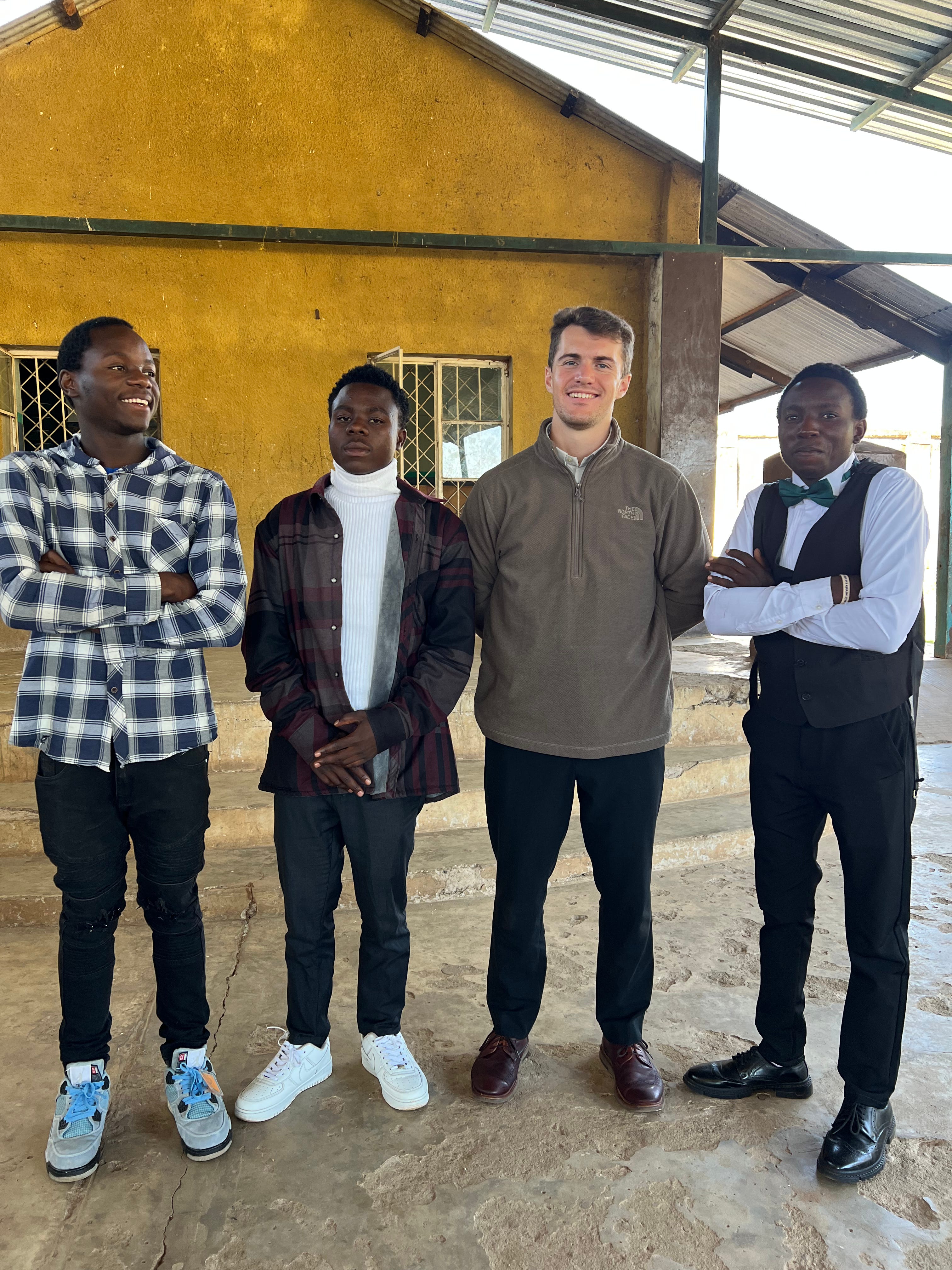
For our students, most of whom come from other parts of Zambia, the story is the same. Usually, these young people are coming from places that are a bit more developed than Lufubu. And yet, their humility is the same. How badly would your average American college student complain if their university didn’t have a dining hall, or a gym, or a library? Our students live ten to a room, fetch water for bathing in buckets, cook over charcoal fires, survive for months on the equivalent of $30 USD. And man—they’re learning how to code! To the eighteen-year-old Ambroise who slacked off in Jay Brockman’s Logic Design class—what’s your excuse?
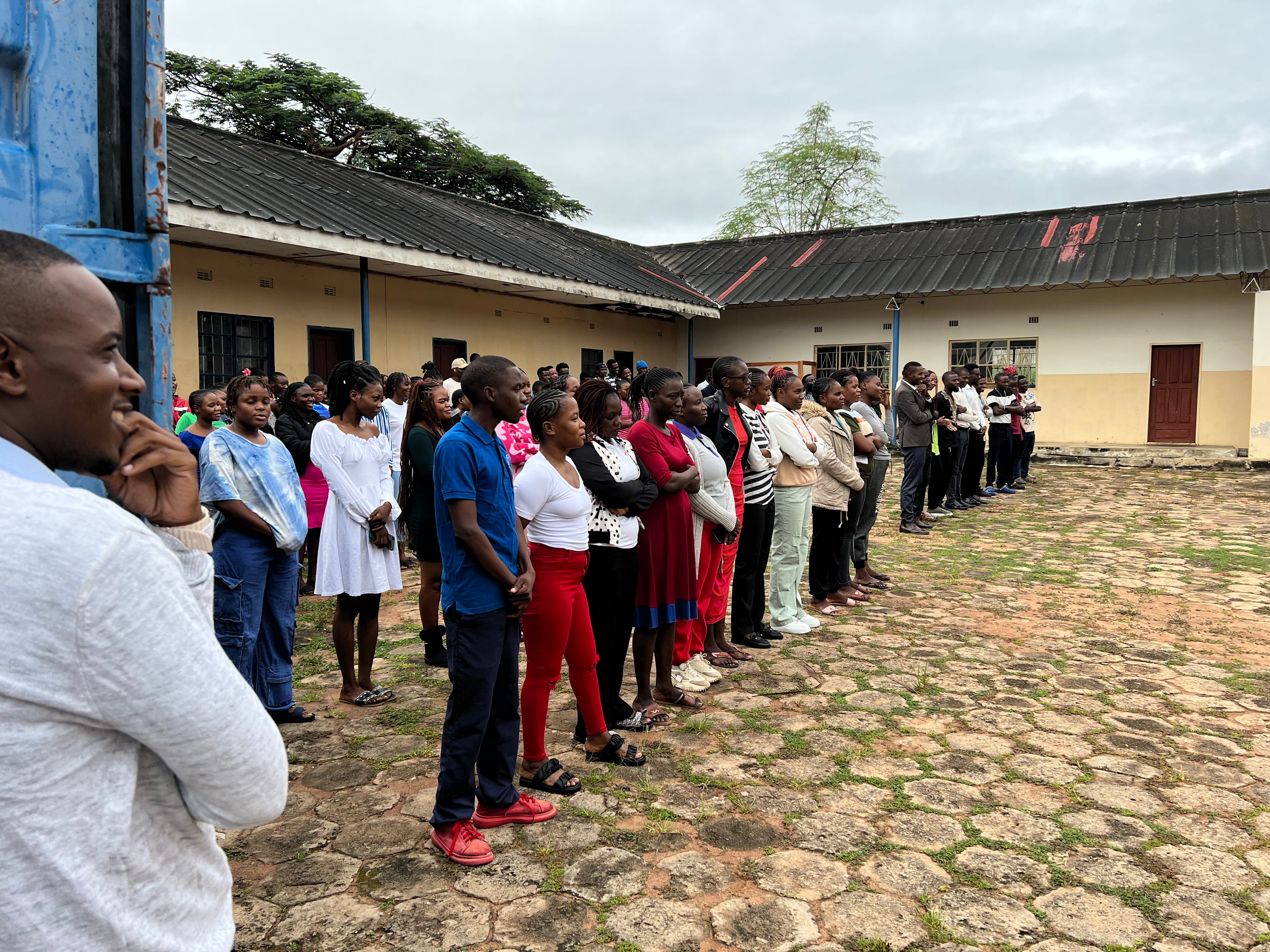
The young people are not at all “sensitive” to their plight—nor do they make excuses or complaints about it. What these young people need is not “sensitivity”. They don’t need pity that doesn’t encounter them, aid that doesn’t challenge them, or service that doesn’t accompany them. They don’t need a plane dropping cash from the sky, or food whose donors are invisible. They need relationships—real love from real people who are willing to share with them in the vicissitudes of their lives. Pity that reduces someone to a hungry mouth does not meet them at the center of their need—which is and will always be in the heart of the human person.
One day, I was confused by something I heard from one of the Small Christian Communities. They were asking Fr. Hamweete for more of “that Starvée”. “Give us more of that Starvée! It’s nice…” It took me a second to realize they were talking about the bags of donated rice labeled “Feed My Starving Children” that have the likeness of a malnourished child on the back.
They had eaten some together after one of their meetings and thought it was delicious. Speaking exactly zero English, they were unable to read the writing on the “Feed My Starving Children” packets, which somewhat patronizingly describe themselves as fortified subsistence-food for those who are experiencing malnourishment. For the donors in America, it was pity. For these Christians in Lufubu, it was lunch.
People here in the village are not sensitive. You can have a little girl come up to you and hold your hand and it will be as calloused and rough as a bricklayer’s. A kid will tell you without a flicker of emotion that his parents “are died”. You’ll go to the clinic to get a cyst drained and they’ll just directly pull out a scalpel to slice it open:
“No antiseptic?”
“No.”
“No anesthetic?”
“We don’t have…”
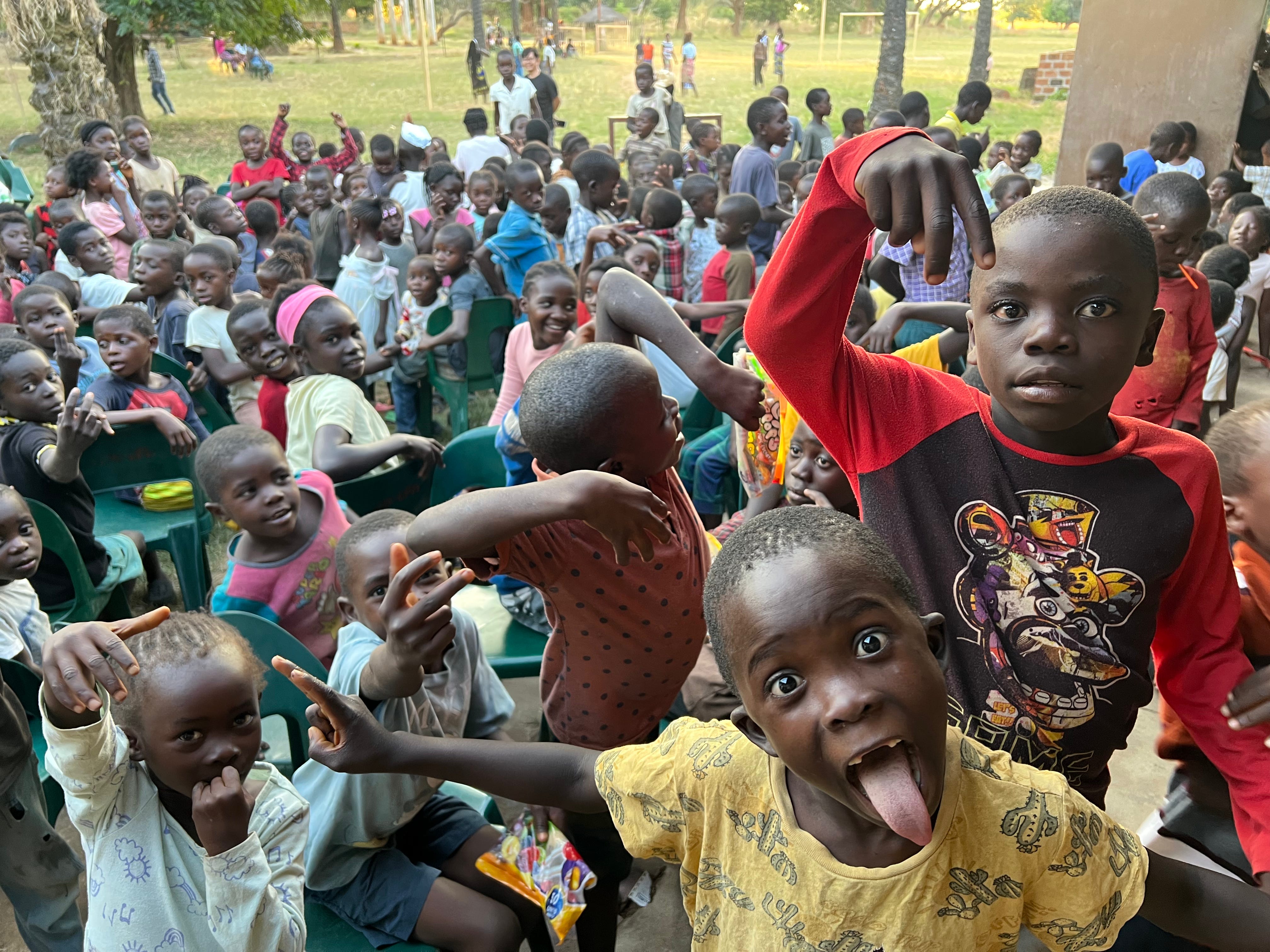
American or European ideas of polite nicety are utterly superfluous. People will unflinchingly call someone “fat” to their face, or refer to a mentally ill person as “cracked”. They’ll say things like “all Tongas are cheap”, or “all Congolese are crooks”. Someone who is not traditionally masculine is “like a woman”. A person with a drinking problem is a “drunkard”. Anyone slightly odd is a witch.
There is no room here for dancing around sensitive subjects. People in Lufubu bathe in a river, work the dirt with their bare hands starting from the age of four or five, eat whatever they can grow, gather, or scavenge. They might experience racism, sexism, ableism—but they wouldn’t name them with such academic precision. If it isn’t as immediate of a problem as living, taking care of their children, putting food in their mouths—they don’t have the luxury to worry about it. Over-academized moral scrupulosity falls by the wayside, as do seat-belt or motorbike-helmet-wearing, knife-safety, electrical safety, modern germ-theory, going to the clinic for facial wounds that could really use stitches, etc. etc.
We had a cow die on the farm. It had just been given some vaccines, so it was considered very unsafe to eat. The farm manager decided to bury it. There was uproar in the village.
“What you did is very wrong, Father,” an old farmer told one of the missionaries.
“Burying food! You should have given it to us to eat.”
It didn’t matter how much it was explained to the people that the meat was unsafe, and, in any case, already buried in the ground. There was already talk beginning that people from the village would simply steal the carcass.
One of the leaders of the Small Christian Communities, Mr. James, said: “These people—they know how to prepare these things. They know how to remove that medicine. You’ll find tomorrow that the cow is stolen—and, on Sunday, the ones who did it will be dancing in the Church!”
The next day, the cow had indeed been dug up and stolen. And that Sunday, there were many people dancing in the Church.
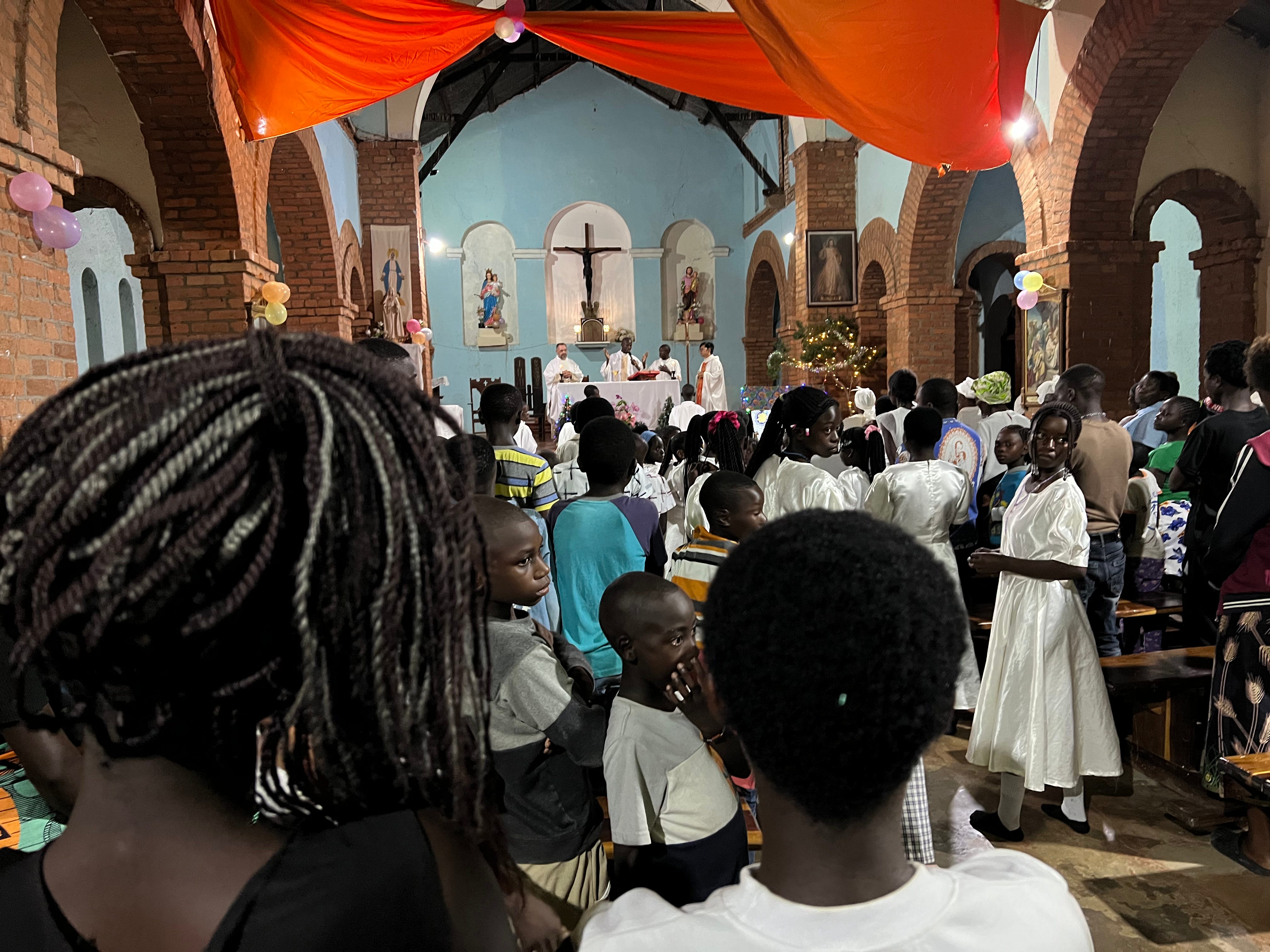
I have thought to myself several times that if one would simply take a seven or eight year old kid from Lufubu—who at that age already cook for themselves, kill snakes, negotiate their own school sponsorships, walk 12 km to travel to market, bind up their own wounds, get sutured without anesthesia—and put him or her in decent American education, they would become an unstoppable force. And yet, the same conditions that make them so hardy also totally handicap their potential. Malnutrition means that many of these children will struggle with mental development. Poor village habits and fatalistic mindsets mean that these kids are swept up into patterns of early marriage and childbirth, perpetual subsistence farming, never upgrading from a dirt-floored house. They simply have not had the examples in their lives to show them how to dream beyond what they see before them—and what they see before them is sometimes ugly in its self-paralysis and defeatism. “We are this way because we are poor,” or worse, “We are this way because we are African.” It would be hard to think of a more stagnating, poverty-perpetuating mindset.
To me, this is the meaning and the necessity of evangelical poverty. The meaning is that, as we voluntarily take on hardship and scarcity, we come to parity with those whom we serve. The necessity is that, without sharing that parity, they would only ever see us as silly, rich, and clueless outsiders trying to impose ideas on a culture they don’t understand. It allows us to speak in a way that well-meaning others are unable. It allows us to move past sensitivity and get on to solidarity, which is what people here actually need.
One-sided, transactional, aid-given-from-a-distance is not actually best for the people that we serve. What engages and elevates them much more is entering into their lives—and not shying away from the challenges, jokes, and rawness that ensues.
This idea is contrasted to most of the standard models of aid we see in the world today. American and EU governments dump billions of dollars into the hands of developing governments who are not poised to make use of it. Truck and boatloads of food, supplies, equipment are just sort of thrown into underdeveloped communities without any kind of on-the-ground follow-up. How would these donors react if they found (as I have…) pristine equipment simply unused, sold for immediate cash, or banged up and broken from misuse? If you want a man to eat for a lifetime, you can’t just give him a fishing rod—you have to teach him how to fish.
I would say that aid sometimes does more harm than good—and I’m not alone in thinking this (c.f. Dead Aid). I actually think it would give more help to an underdeveloped community to have a dedicated volunteer on the ground for a year than to just hand them cold hard cash. Someone might disagree with this. They may ask themselves:
“Isn’t it better to just give them cash so they can buy what they need?”
“Wouldn’t it be better to just send them food so that they don’t go hungry?”
“Isn’t it better to give impoverished people supplies and let them decide for themselves what to do with them?”
Well… take it from a friend of mine that works for UNICEF. She said that one of the first case studies new international aid workers are asked to examine is a cautionary tale that occurred (among other locales) right here in Luapula Province, Zambia. Several western countries collaborated to distribute millions of mosquito nets in the area to combat malaria. The two main results were:
Local mosquito net makers were put out of business
People started using the nets for fishing, damaging river and lake ecosystems and adding carcinogens to the water supply
Moral of the story: sometimes it isn’t best to just throw stuff at people without any follow-up.
Here’s another cautionary tale—one they probably won’t teach you in school. It’s not exactly “sensitive”. It’s a hard truth nonetheless.
If people grow used to receiving things in charity, they can forget how to provide for themselves. Not immediately—but compound constant, uncritical aid over generations and you end up with, well, Lufubu. Cycles of poverty that never end. Cultures of dependence that stifle progress.
Young people are especially vulnerable to this. If you grow up with everything being provided for you by entities with whom you have no relationship—government programs, NGOs, international aid initiatives—you start to see assistance as something that basically just falls from the sky at fixed intervals. And you start to feel entitled to it. Once this happens, you’re hooked—dependence.
The Church is not innocent of this. There has been a mission in Lufubu since the White Fathers (Société des Missionnaires d’Afrique) arrived in the 1920’s, were granted ten hectares of Crown Lands by HIS MAJESTY King Edward VIII in 1936 (according to the title deed Fr. Waldemar keeps in his office), and immediately threw up a beast-mode brick church that still stands today—and gets used every Sunday.
What have one hundred years of mission accomplished? Plenty, for sure. But one of the biggest stains on this legacy is that many in Lufubu have been aid-without-relationship’ed into generational poverty. Huge sums of money were poured into the village by the Salesians to build up Lufubu Mission—cash paid directly to local contractors, farm-workers, timber merchants, stonemasons, etc. Looking at the state of development in the village, you would think it had simply flitted away. You would never guess the amount of money that had flowed through the place.
When people start to rely on aid, they can sometimes forget that it’s not guaranteed. If they never develop self-sufficiency apart from it, they’re left with no idea what to do if it stops.
I’ve seen this with my students in clear detail. A student will receive a “food allowance” (just cold hard cash) from the government meant to cover their eating expenses for the term. They’ll waste some of this money on frivolous things (especially alcohol). When it runs out, they’ll have no other option but to go around begging someone to support them. They’ll do this several times in a single year because someone is always there to cover their mistake.
What you end up seeing a lot around Lufubu is this—people are more willing to degrade themselves by begging than take simple measures to ensure self-sufficiency. How can this state of affairs not erode human dignity? And yet, how can you blame the people?
People will misunderstand this. They’ll think that it’s best to just always give people what they want. Yet, what I have found, is that if you truly want people to progress, sometimes it’s necessary to challenge them as a friend, rather than provide for them as a stranger. And this is the kicker: it’s impossible to do this without entering into their poverty.
“No” heard from the rich outsider who lives behind his compound wall, who throws food or cash over the top out of pity but not yet out of friendship—will only ever be heard as selfishness. “No” heard from a guy who knows your name, spends time with you, shares the same hardships as you—that can be transfiguring.
When I was in Lusaka I had a wonderful opportunity to spend time with some UN and UNICEF workers at a dinner my friend Noreen (fellow Salesian volunteer) invited me to. While they were great folks, it was a glimpse into an utterly different world. We ate at Onoma, an incredibly nice Mykonos-imité Greek restaurant that flies in their ingredients and caters to the UN-NGO-Diplomat circuit of (mostly) white people. After six months in Lufubu, I was like a visitor in a foreign land. My head spun listening to discussion about UN meetings and office drama and the drink preferences of various diplomats. I found it really funny when they referred to my teaching in Lufubu as “field work”, or when they were super intrigued by the fact that Noreen and I “lived with priests”.
This is not to criticize those people in particular. Actually, I really liked all of them, and respected that they were trying to do what they believe is right—even if the world they inhabit is completely different from mine. Charity in the modern, secular world is a kind of anomaly, a kind of serious eccentricity. I certainly would not have been in their shoes if I had never had a religious conversion. I probably would have laughed if you had suggested international aid work to me then.
In any case, the point I want to make here is that, if one isn’t careful, one might spend time, even a whole life, living in an impoverished place without feeling the real sting of poverty—and thus, without adequately entering into the lives of the people you are trying to serve. This isn’t a problem exclusive to the UN-NGO-diplomat circle. You can fall into the same trap anywhere, even in Lufubu. It’s possible to serve the poor without ever overcoming the distance that separates you. It’s possible to work on someone’s behalf while being completely out of touch with the details of their life. I think this is the risk that any voluntary service runs—nobody really likes poverty. Nobody really likes “smelling like the sheep”.
When you share life with people, without walls between, you realize that “sensitivity”—the kind that prevents the back and forth, humor, and blunt honesty necessary to form authentic relationship—can actually be a barrier to solidarity: living alongside, eating alongside, working alongside the people you desire to serve.
It’s the same lesson I learned this past summer at the Catholic Worker. No homeless person is the kind of shrinking daisy that will wither up if you make some joke with them. Actually, a lot of them appreciate that kind of gallows-humor. They live on the street, man. They would prefer you became friends with them and smoked a cigarette together behind the gas station instead of throwing five dollars at them from behind your car window and then very gently discussing them when they’re not around. At the end of the day, you’ll find that you’re very sensitive, and the people you want to serve are no better off.
And yet, the blessing, and the risk, in authentic solidarity is that one begins to become like the people they serve—in their strengths as well as their weaknesses. It is good to move beyond an excessive sensitivity that causes barriers, but eschewing all sensitivity to the point where you no longer recognize the difference between village hardiness and dehumanizing poverty—that’s a recipe for making the lives of the people you serve even worse.
People in Lufubu are not sensitive. This lack of sensitivity is not all endearing. Seeing parents let their small children run around with knives or whatever is usually pretty anxiety inducing. For several kids that come to the oratory—maybe no older than four or five years old—I’ve literally never seen their parents. I see the kids all the time, wandering here and there around the village unattended, but never the parents. I know they’re around. I even know who they are. But I’ve never seen them and their children in the same place.
Young, unmarried fathers will often leave the raising of their children to the unsupported mother. Kids will run around poorly clothed and underfed while their parents are at home drunk. Feuds between people in the village will result in one party going to the witch.
There is a rampant fatalism here. A real indifference to life and death that can seep into the people and infect all of daily life. Local electricians will work on live power while drunk and with no safety equipment. Broken power lines will just be left lying around on paths where people are walking. Live sockets will be left open with wires sticking out where people are moving and working. Jagged construction wreckage will be left around where children are playing. Huge ankle-breaking holes will be left open on the football pitch. Fifty-plus people will be stacked on top of each other in the bed of a pickup truck driving at sixty km/hr. Soldiers will be walking around with loaded AK-47s pointing the barrel at everyone that passes. Basic operations at the rural clinic will be done with no antiseptic and no anesthesia. Small children will be running around unattended with infected wounds leaking pus.
“What’s sad is that people will keep doing it like that, and then somebody will really die. I’ve seen it happen,”—one of the missionaries in Kazembe tells me.
People here sometimes seem to have given up on themselves. I was in Kazembe trying to get an issue with my SIM card fixed. The guys that ended up “fixing” it for me totally ripped me off (they didn’t actually fix anything at all), but that wasn’t the interesting part of the story. One of the local drunkards came up to me to ask me for money or food or anything I could give. “Man, I’m starving! Give me food.” I handed him a roll I had just bought from the bakery. “Man, I can’t eat this! This is African food! Give me some real food!” Everyone standing around us laughed.
“We are Africans, bwana,” Br. Philip tells me as I ask him why people in the village will refuse to take antibiotics, or will not care enough to wash bat droppings from a plate, or will walk around with huge open cuts and wounds that could very easily be stitched up. I know Brother is joking, but it belies a real sentiment—people in the village will sometimes convince themselves that nothing will ever change.
“People in Lufubu are different,” one of the aspirants says. “People aren’t like this in the rest of Zambia. It’s just here. They can’t organize anything, they can’t make a program in the Church. They can’t do anything for themselves!”
I don’t know how true that is in an objective sense, but it might be more true than people here would care to admit. Driving through the Southern Province of Zambia, one might see nice roads, nice houses, nice farms—development. In the Copperbelt, there’s lively civic culture, intellectual exchange and debate, accredited universities, multi-billion-dollar mining operations. In Lusaka, a walk through Woodlands will take you through nice, leafy-green neighborhoods, incredible restaurants, malls, art exhibits.
Luapula Province, and Lufubu in particular, seem to have been forgotten by all of this, left behind when the rest of Zambia achieved development. Politicians will get elected promising roads and schools. When they get in office, they’ll pocket or block development funds, then resign in the middle of their term to seek re-election elsewhere. Roads are haphazardly patched up maybe once a year. Schools are understaffed and underfunded. There are no universities here.
There are plenty of bright young people that have come out of Lufubu. And that’s the key phrase: “come out of”. Very few of them ever come back.
One of the brightest girls I met here—Kenna, the youth chairperson for the parish when I arrived—is now in Lusaka studying nursing. Her brother, another brilliant student, had an opportunity to go to Israel three years ago for a six-month course of study. He somehow has managed to stay there working until now. He sends home money once a month.
Most people who find success in Lufubu use the opportunity to go elsewhere. Many of them only return to die.
An old man passed away in the village a few years back. He had spent a lifetime as a successful businessman outside of Lufubu and only returned in his last months to die where he had been born. When it came time for the funeral, a bunch of nice cars—big, beefy Hiluxes, Land Cruisers—turned up at the parish. They had come all the way from Lusaka to pay their respects. On any other day in Lufubu, one would be surprised to see even a single beat-up motorbike. The high-rollers vanished as soon as they arrived.
If one isn’t careful, these attitudes can rub off on them. I see many missionaries fall into this trap. Rather than trying to elevate the people they serve, they pick up the same indifference towards basic safety measures or personal health, the same fatalistic outlook on local advancement or improvement, the same sloppiness in organization, the same lack of punctuality, the same lack of discipline, the same indifference over the outcomes of projects and events. If you stay here long enough, you become jaded—just like the villagers who make fun of each other for being lazy or thieves or drunkards.
And yet, Lufubu is certainly not all thieves and drunkards—despite what the jaded missionary or old-timer villager might lead you to believe. Nor is it the kind of place that is somehow fated to remain an undeveloped backwater. People in Lufubu have all kinds of incredible qualities—and the potential one can see here is enormous. People will work long, hard hours for very little money. Students will learn in incredibly difficult conditions. Mothers will raise children, families will send youths to college. And a few of them even come back—bringing new ideas about development with them.
Students will come from all over Zambia to attend DBTTI. Buyers will come from all over the area to get produce from the farm. There’s a new Airtel tower going up, new offices and homes are being built on a gigantic road grid being carved out of the bush. Development is happening, and our young people are part of it.
Youths here will surprise you with their intelligence, and embarrass you with their largesse. People in Lufubu are not ashamed to ask for what they need (or want), but will always find some way to give from what they have—even if it is very little.
The kids at the oratory ask me for sweets (candy) almost every day. It can become very annoying. The ones that don’t speak English will sometimes just say “Muzungu! Sweetie!”—White person! Sweet! One time, I thought I would joke around with one of the worst offenders. He had been given a sweet during one of our programs, and I went up to him and stuck out my hand. “Give me!” To my utter surprise, he immediately handed it over.
“No, no!” I said. He looked confused.
“Nshileefwaya!” I said. “I don’t want!”
Sometimes the kids will be with us for a program all day. They’ll eat nothing besides a few palm nuts they manage to scavenge and the little ration of starvée we give them at the end. Without fail, one of them will always come up to me with their plate: “Come eat.” I always refuse—but part of me thinks they would genuinely be happier if I didn’t.
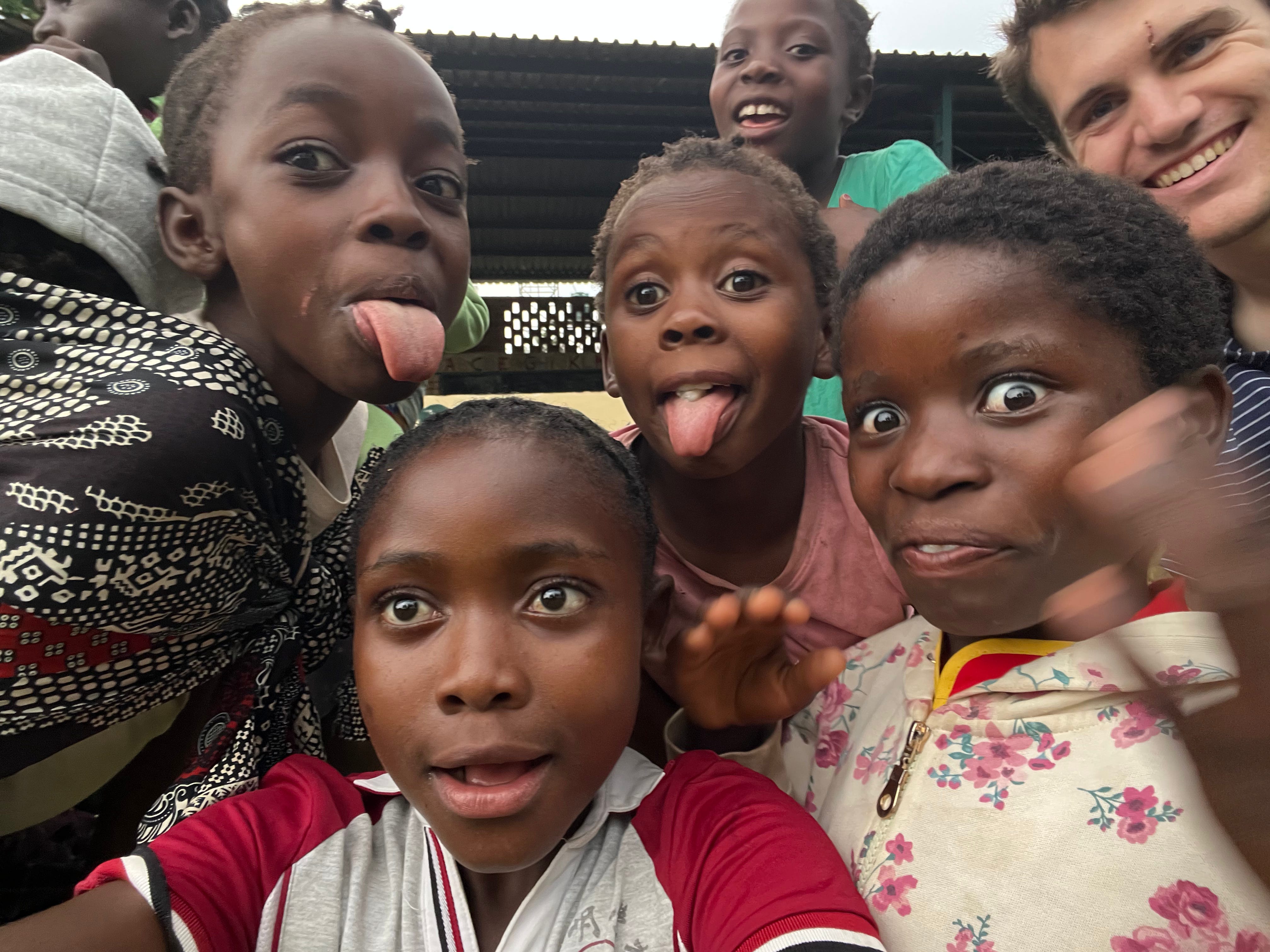
Parishioners will bring whole chickens for offertory on Sunday—even cook them nicely for us to enjoy. Sunday collection will turn up hundreds or even thousands of Kwacha—in a place where fair pay hovers around 5 Kwacha per hour.
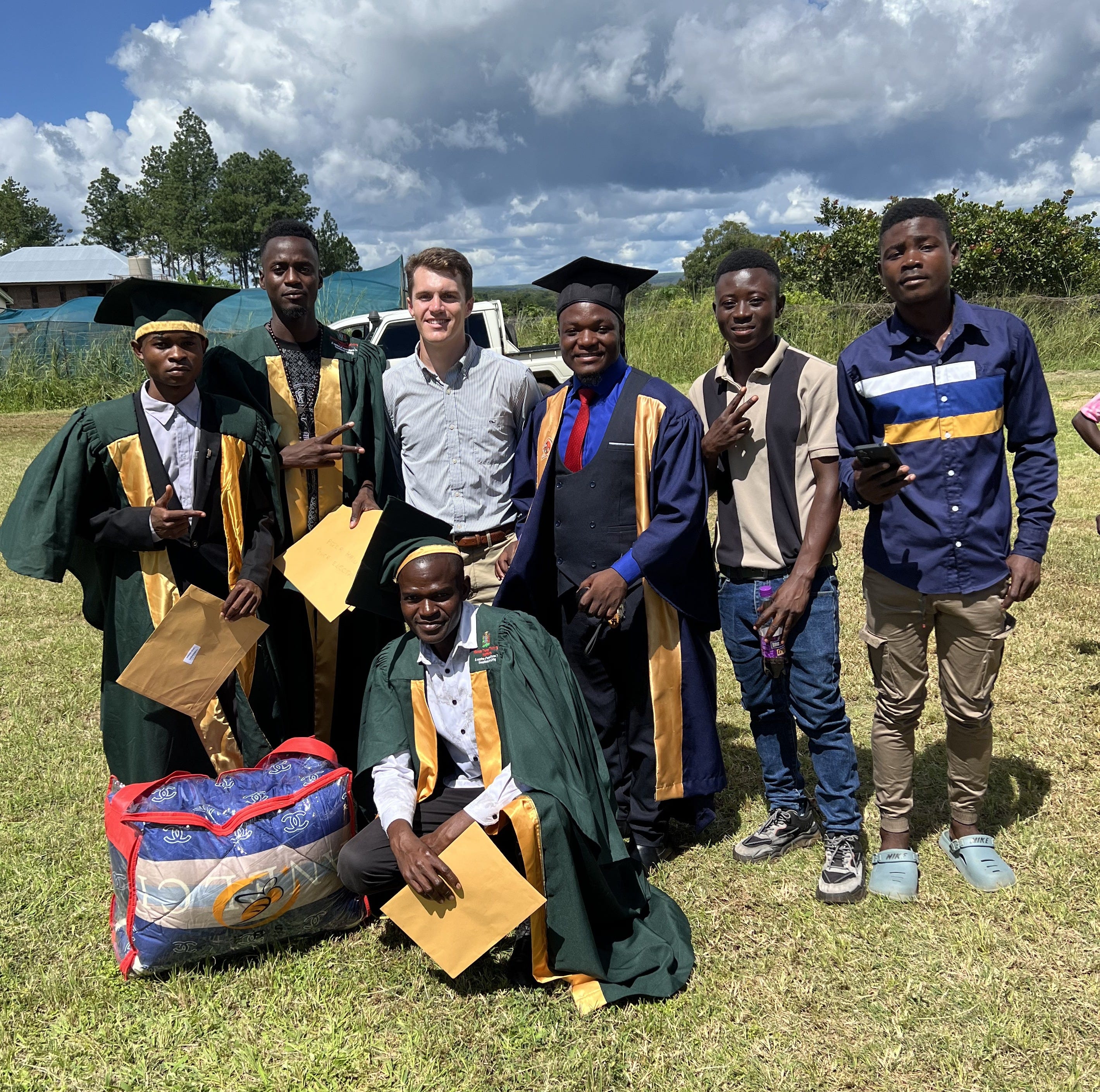
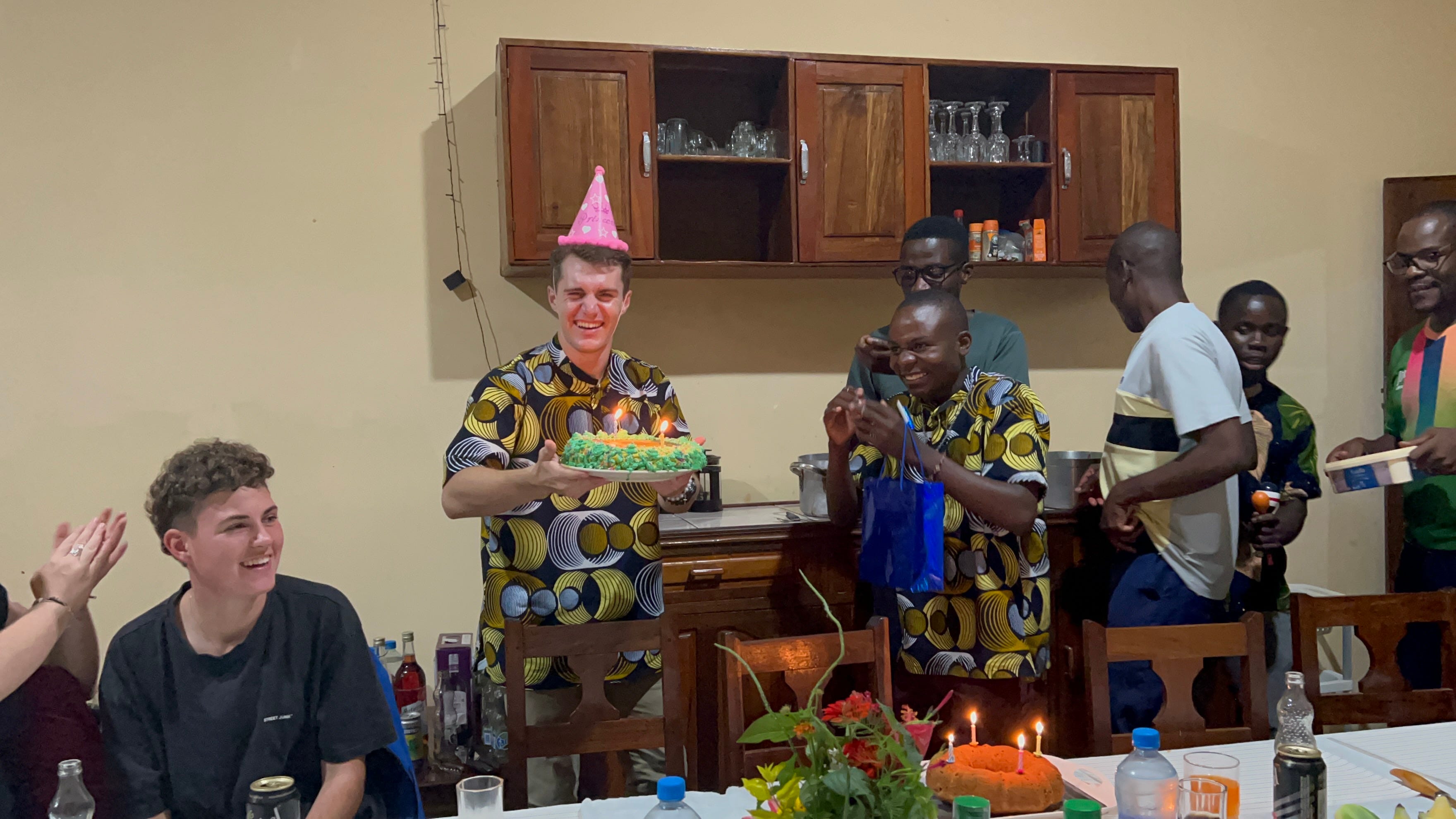
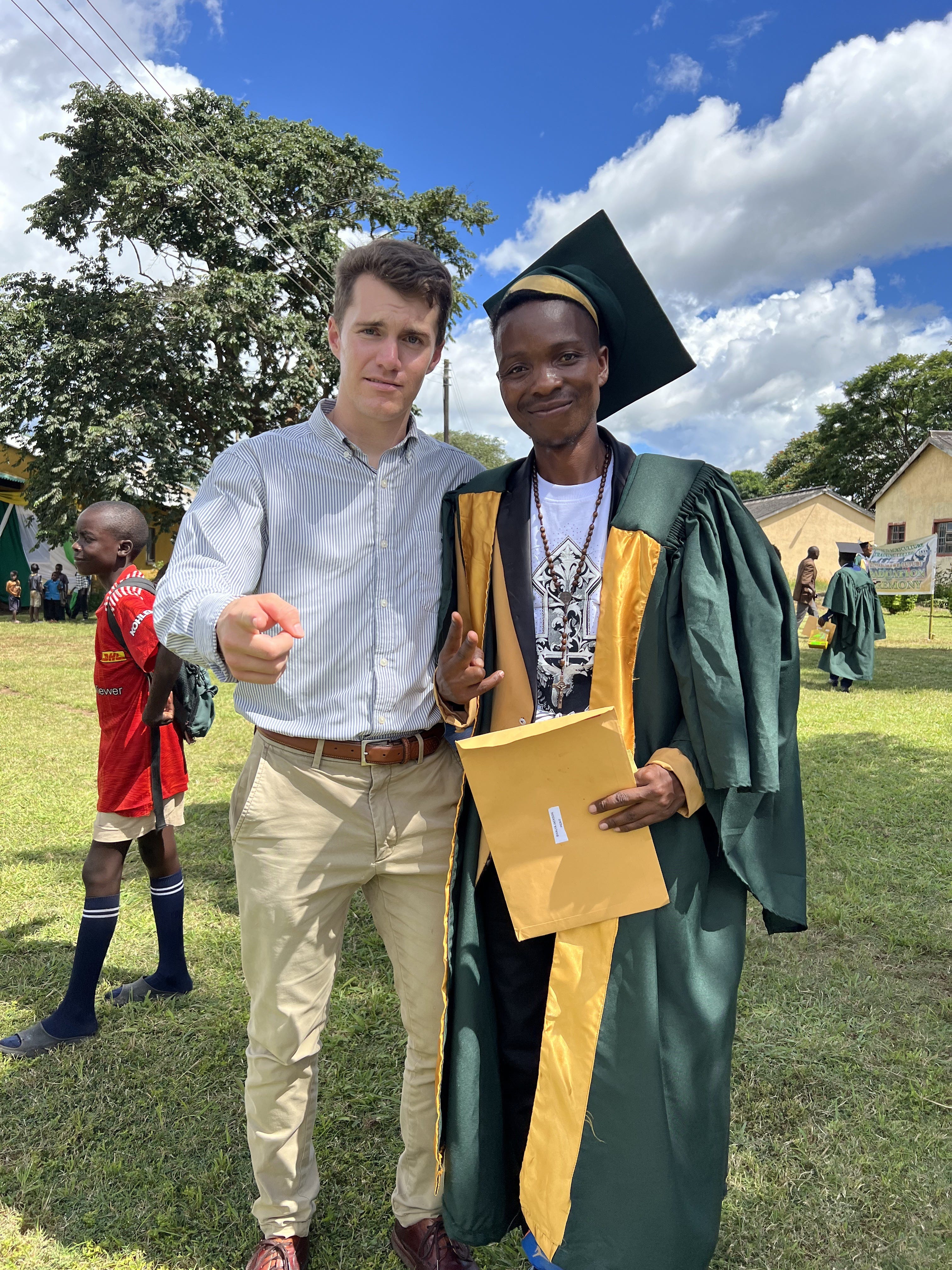
People are incredibly generous to guests or outsiders. Anyone who is “new” is shown the greatest kindness and respect. For my birthday, two students I barely knew organized a 15-minute tribute dance in my honor. Students on shoestring food budgets will invite me to eat dinner with them and then try to give me the best portion. At graduation, students who I hadn’t even taught introduced me to their parents. At a birthday party I once attended, the cook, who was busy cutting two chickens into tiny pieces for 20 different guests, tried to give me an entire leg and thigh.
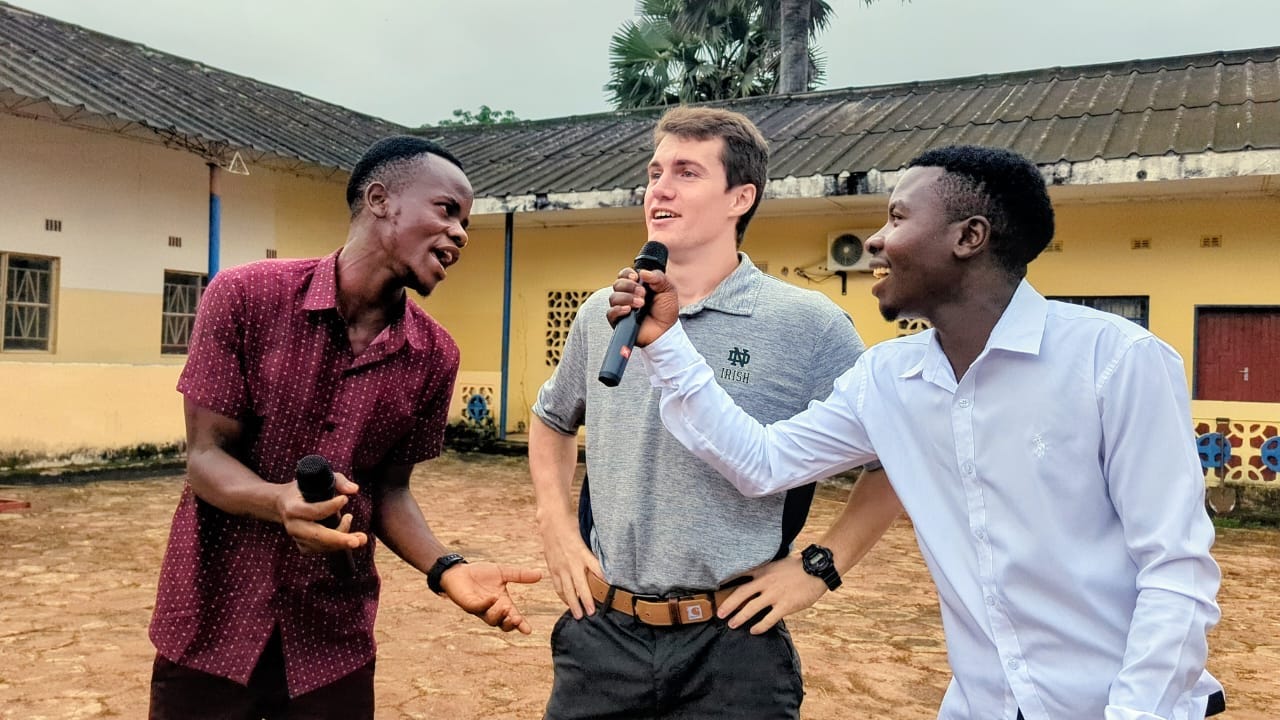
Men from the village will sit for an hour as I give them a talk on drugs and alcohol (at the request of Fr. Hamweete), then respectfully ask questions and defer to my judgement. Women in the village will address me in Bemba with the honorific noun form. At a wake in October for a boy who had died, the village asked me to give the opening prayer.
None of these things are because I’m special. It’s because these people are special—really, truly kind and generous to the stranger, the outsider. They consider it an honor for them to be there.
And so, at the end of the day, the missionary must walk a fine—some might call it “impossible”—line: they must become like the people they serve, but only by absorbing their positive qualities, and not the negative. They must absorb their mannerisms, their culture—indeed, even their hardships, their struggles—while at the same time leaving themselves room to call people out on the areas where they need to change. They can’t do this if they suffer from the same weaknesses.
To come here in authenticity, to serve people at parity, a missionary must leave the cushiness, the foppishness, the wastefulness of the first-world behind—but they must not forget the qualities that allowed for that success and extravagant plenty in the first place. Efficiency, punctuality, a love of hard work, a sense of personal responsibility, awareness of the common good, even a desire for material advancement—these are good things! Young people here need this. If we want to see them advance, we need to inculcate this spirit. It’s not quite Gordon Gekko “greed is good”, but you certainly have to want to improve your standard of living before it can be improved.
There are already steps being taken towards this end. Well-educated instructors and enthusiastic students coming from other parts of Zambia bring with them ideas of progress and development. Don Bosco Trades Training Institute (our school) brings in educators, motivational speakers, and politicians to try and stir up young people’s confidence for making change. Most importantly, there are always Salesians here at the Mission that are willing to engage young people on a person-to-person level, challenging them to become “Good Christians and Honest Citizens”, just like Don Bosco intended.

So—where does this leave us? What do we need?
Well, for starters, we need more people from outside to come here. Farmers, teachers, professionals—even just young people with big hearts and a love for hard work. We need financial support—but more than that, we need partnerships of solidarity with sister parishes and communities around the world. Problems aren’t solved by just throwing money at them. They’re solved by building relationships, fostering mutual exchange of blessings—and this sometimes requires one to move beyond the neat little boxes of social nicety.
Volunteer and missionary work are a good thing! Don’t let anyone tell you otherwise. For one thing, struggling institutions get needed help and new life. For another—and more importantly—young people start to learn what’s possible for them. They get inspired, they become hungry. A liberal academic in America might call this “neo-colonialism”. Ask anybody around here and they’ll call it “opportunity”.
This is not to say that all international involvement in Zambia is perfect—or even good. Voluntourism is a real problem—as my friend Stefan joked when he called the African Impact house in Livingstone “the white-saviorism hostel”. Missionaries aren’t immune from self-promotion at the expense of locals, either. Aforementioned burnout or indifference can lead to disregard or disrespect for local people, which, in the end, harms them more than helps them. And international companies (especially mining companies…) still come to Zambia to totally rip off, exploit, and undercut the Zambian people. All of this might just be the “neo-colonialism” that gets talked about—or something worse.
And yet, there are miles of difference between these things and the kind of authentic, personal, loving service I have seen here at Don Bosco. Lumping all types of foreign involvement together only shows that you have no understanding of the world you’re talking about. Anyone critiquing voluntary service from their armchair gets to feel smug and satisfied while accomplishing nothing.
So, at the end of the day, it’s not sensitivity our friends here need. It’s not well-wishes, or coddling, or even starvée. It’s sacrifice. Personal service at a cost. Friendship. One might even call it love.
Sunday, June 7. Feast of Corpus Christi. Lufubu, Zambia
Today, we had a Mass and Eucharistic Procession for Corpus Christi. It was incredible. There are several different women’s choirs in the parish. Each of them was wearing their own colors—patterned head scarves matching patterned chitenge dresses, all with some religious motif, the Sacred Heart, folded and praying hands, etc. The Xaverian youth group were wearing their uniforms—a kind of red, white, and green scouting garb with a folded seaman-style cap. They carried a little posted tarpaulin embroidered with the likeness of the Eucharist, words from John’s Gospel (I am the Bread of Life) in English and Bemba. The altar servers walked in the front swinging the incense censer. Fr. Cao and Fr. Waldemar followed, taking turns holding up the huge, gilded Monstrance in the likeness of a burning sunburst, Christ in the center. We all followed behind singing songs, talking, praying. Kids ran around or stopped to look, wide-eyed, as the crowd passed.
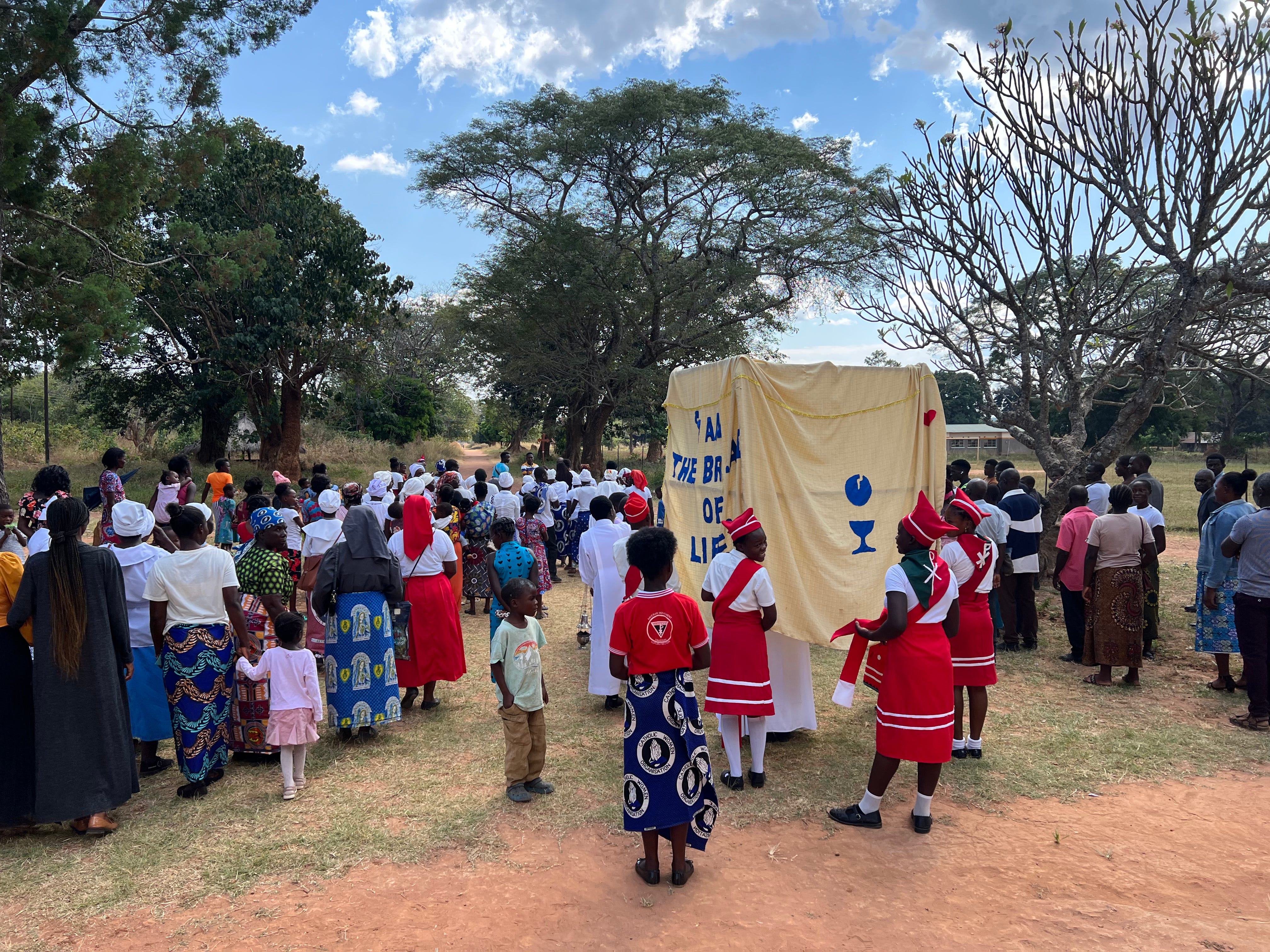
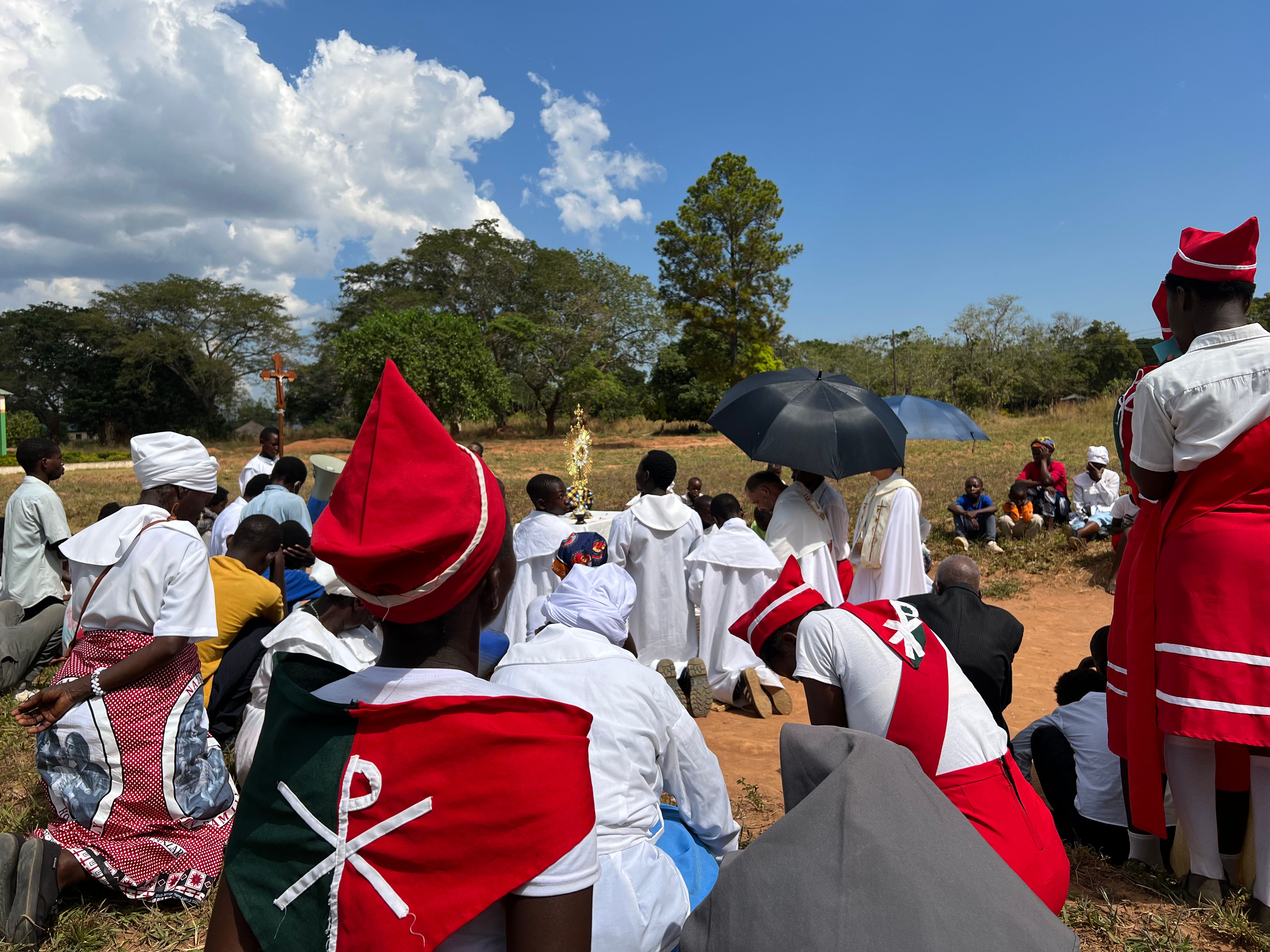
Different houses had erected small altars for us to stop at. These were simple wooden tables draped with white cloth, two candles set and burning to flank the Monstrance. The procession stopped at each of them to kneel, receive Benediction, read Scripture, and pray. The scenes repeated themselves—hundreds in their Sunday best, kneeling in the dirt, thatch-roofed and clay-walled houses behind, mango trees dropping leafy boughs over us, rows of dried and dead maize mixed in with the remnants of tomato, pumpkin, sweet potato gardens. Puffy clouds drifted across sparkling azure. At each altar, Father would bless us with the Monstrance, sweeping up, down, left, right—a cruciform sunburst, light glinting and shining in reflection from above.
As the procession ended, we returned to the Church, received the final blessing, and departed. People spent some time talking on the steps outside. Students from the college mingled with the young people from the Oratory. I went and grabbed some candies to distribute among the altar servers. We talked and laughed a little bit, and then went our separate ways. “See you tomorrow!” they said. “Pa mailo!”
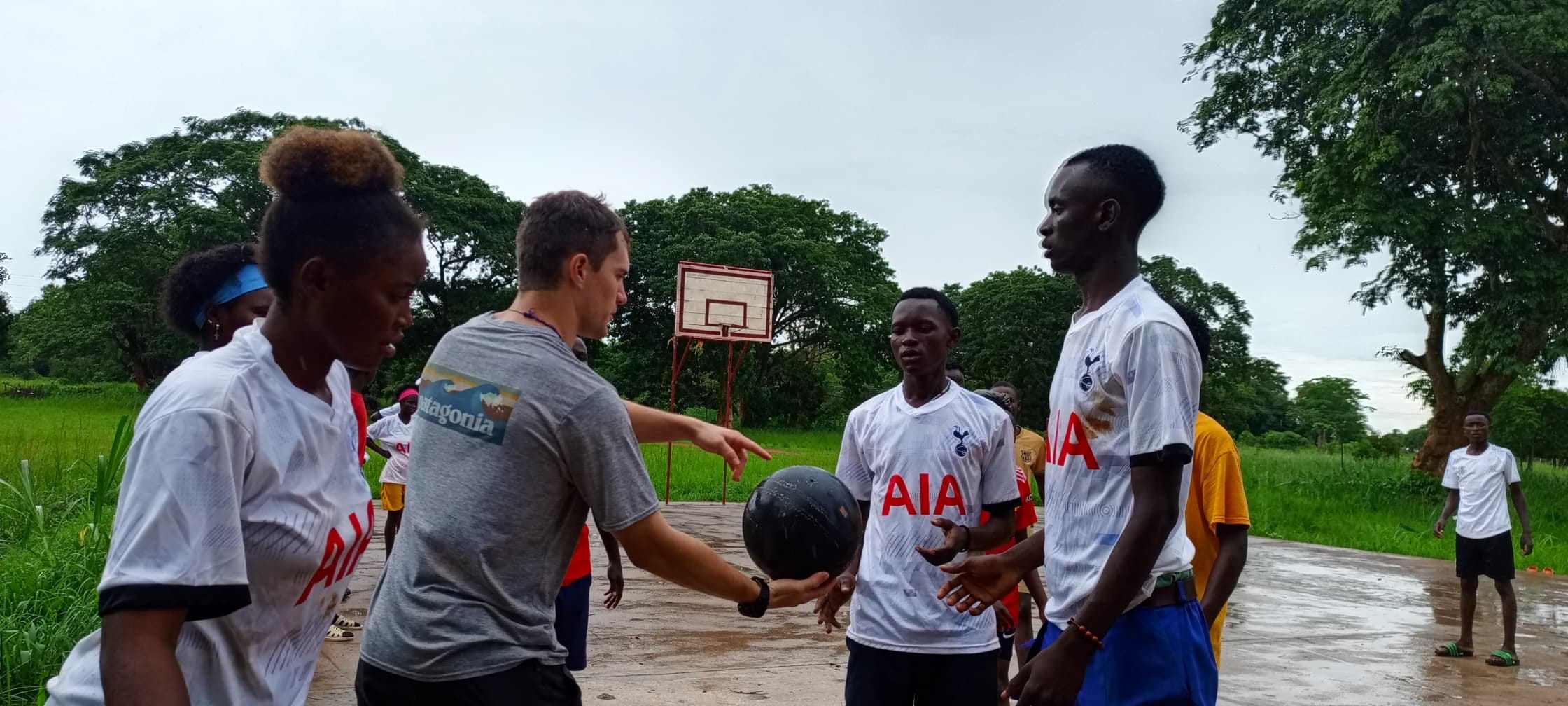
The table at dinner tonight had more laughs than I’ve heard in the house for a long time. Our community received two new members: a co-adjutor brother (Br. Chris) who is coming to run the farm and a seminarian (Br. Benjamin) who is here on holiday from school. We played some pick-up basketball the other day at the oratory. They’re settling in nicely. The jokes have already started.
Life is warming up a little bit. Happiness is coming back. The clouds that have hung over the community are clearing up—and behind them can be seen a few rays of sun.
I’m becoming more of a missionary every day. I’m playing football barefoot in the thorny grass. I’m eating nshima and liking it.
Photo Gallery. Last Eight Months.